The Basic Principle
A weeping tile system is a footing drain — a length of pipe installed at the base of the foundation wall, at or slightly below the footing, that collects groundwater before it can accumulate and press against the wall. The pipe is either perforated or slotted to allow water to enter, then carries it by gravity (or through a sump) away from the structure.
The term "weeping tile" originated with the clay tile segments — short unglazed terracotta tubes — laid end to end with gaps between them in the 19th and early 20th century. Water seeped in through the gaps. By the 1970s, perforated PVC and corrugated polyethylene pipe had largely replaced clay tile in new construction, but the legacy name stuck.
Original Clay Tile: What Still Exists in Older Homes
Homes built in Canada before approximately 1960 almost certainly have clay tile footing drains — if any footing drain was installed at all. Some older homes, particularly those built before the 1940s, have no footing drain whatsoever; they relied entirely on dense, well-drained soil conditions or a high foundation grade.
Clay tile degrades over time through several mechanisms:
- Root intrusion — Tree roots, particularly from willows, maples, and poplars, are strongly attracted to consistent moisture. They enter tile joints and grow within the pipe, eventually blocking it entirely.
- Soil displacement — Frost heave and soil consolidation can shift tile segments out of alignment. A misaligned joint no longer drains to the next segment — water pools at the offset and may back up.
- Silt accumulation — In clay soils, fine particles migrate through tile joints over decades. Without a gravel filter bed (which many older installations lack), silt eventually fills the pipe interior.
- Physical collapse — Terracotta tile becomes brittle with age and can crack or crush under soil load, particularly when the grade has been raised around the building after original construction.
Modern Perforated Pipe Systems
Current Ontario Building Code requirements specify perforated pipe (typically 100 mm diameter PVC or corrugated HDPE) embedded in washed gravel, wrapped in filter fabric. The gravel bed — minimum 150 mm below and around the pipe — provides a permeable pathway for water to reach the pipe while the filter sock prevents fine particles from entering the perforations.
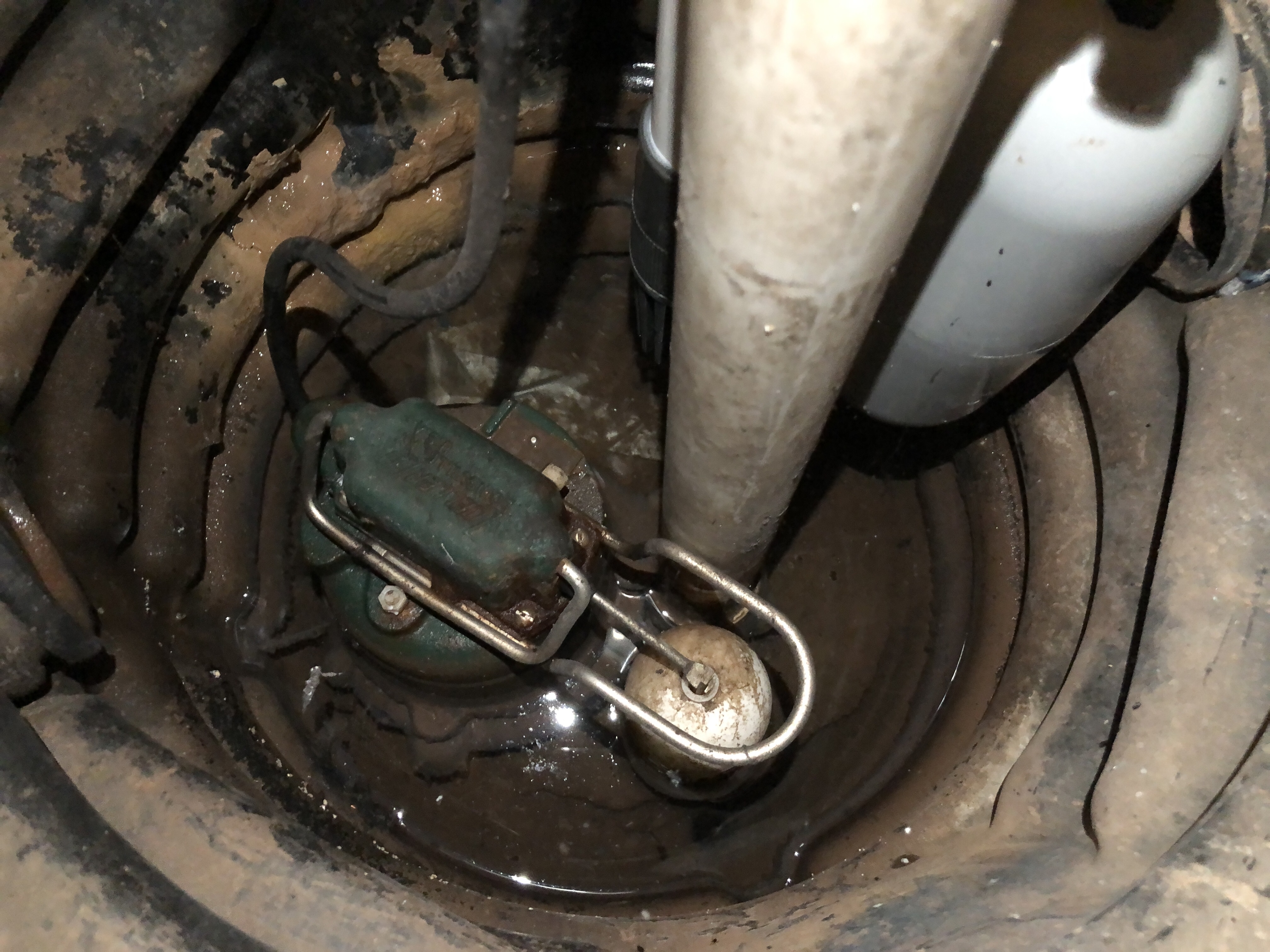
The discharge options depend on site conditions. Where topography allows, the pipe drains daylighting to a downslope point at grade. In flat urban lots — the majority of Canadian residential properties in municipalities — the pipe connects to a sump pit inside the basement, where a submersible pump discharges the collected water to the municipal storm sewer or a dry well.
How to Assess Whether a System Is Functioning
The clearest indication that a footing drain has failed is seasonal or post-rain water entry at the base of basement walls — particularly at the joint where the wall meets the floor. Efflorescence (white mineral deposits) on block or poured-concrete walls indicates long-term moisture movement through the material, which suggests sustained hydrostatic pressure rather than surface condensation.
A camera inspection — using a small-diameter CCTV drain camera inserted into the cleanout access, if one exists — can identify root intrusion, offset joints, and areas of complete blockage. Camera inspection costs between $300 and $700 depending on pipe length and access conditions, and provides far better diagnostic information than guessing from surface symptoms alone.
Where no cleanout access exists, the cleanout can sometimes be created by excavating a small access pit at a foundation corner — a considerably less expensive proposition than full perimeter excavation.
When Replacement Is Necessary
Not every problematic weeping tile system requires full replacement. Localized root blockages can sometimes be cleared with hydro-jetting (high-pressure water), and a blocked cleanout can be re-established. However, the following conditions generally indicate that repair is not a viable long-term solution:
- Camera inspection reveals collapsed sections throughout the run.
- Soil has migrated into the pipe along most of the perimeter.
- The pipe is discharging to the sanitary sewer and the municipality requires disconnection.
- Extensive root intrusion across multiple tile joints.
Full replacement typically occurs in conjunction with exterior waterproofing, since excavation to footing depth is required for both. Replacing the footing drain alone — without addressing a deteriorated exterior membrane — is a common source of re-treatment work, because water that bypasses the membrane reaches the footing and overwhelms even a functional drain.
Exterior vs Interior Weeping Tile
The original weeping tile concept is an exterior system — installed outside the foundation wall at the footing. Interior footing drain systems, which run inside the basement perimeter, function differently: they do not intercept groundwater before it reaches the wall. Instead, they collect water that has already seeped through the wall and channel it to the sump.
Interior systems are described in more detail in the article on interior versus exterior waterproofing methods. For properties where the original exterior clay tile system has failed, the decision between exterior tile replacement and interior drainage installation is largely a function of site access, budget, and whether active membrane repair is also required.