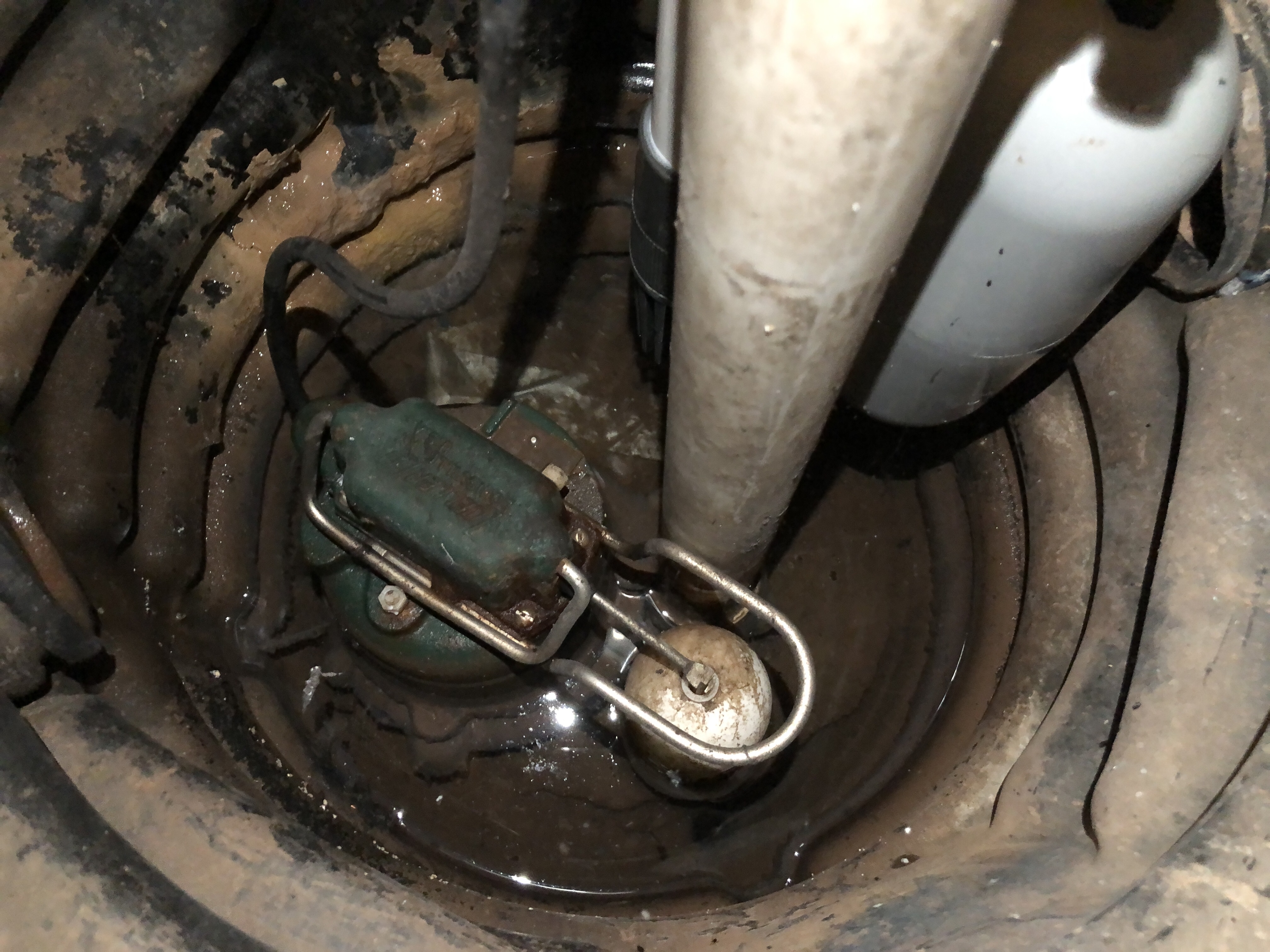
What a Sump Pump Does in a Drainage System
The sump pump is the discharge component of an interior drainage system. Water collected by perimeter channels or a weeping tile network flows by gravity to the sump pit — a lined hole, typically 450–600 mm in diameter and 600–900 mm deep, cut into the basement floor at the lowest point. When water in the pit reaches a set level, a float switch activates the pump, which forces the water up through a discharge pipe and out of the building.
Without a pump, collected water would simply fill the pit and overflow. The pump keeps the water table effectively lower than the drainage plane of the system.
Pedestal Versus Submersible Pumps
Two pump configurations are in common residential use. A pedestal pump has its motor above the water level on a vertical shaft, with only the impeller submerged. This design runs cooler because the motor is in air and is easier to service without removing the pit cover — but the upright column occupies space above the pit opening and the motor is audible during operation.
A submersible pump sits entirely within the pit, below the water level. The motor is sealed against moisture. Submersibles are quieter, have a lower centre of gravity (less vibration), and the pit can be covered with a sealed lid that also reduces radon and humid air entry into the basement. For these reasons, submersible pumps are the standard choice in new residential installations across Canada.
Sizing: Flow Rate and Head Pressure
Pump capacity is measured in gallons per minute (GPM) or litres per minute at a specified head — the vertical height the pump must lift water from the pit to the discharge point. A pump rated at 40 GPM at 10-foot head will move considerably less water if the discharge pipe rises 20 feet before turning horizontal.
For a typical residential application in southern Ontario — a 150 m² house footprint in moderate water table conditions — a 1/3 horsepower pump rated at 35–45 GPM at 10-foot head is generally adequate for routine operation. High water table conditions — found in much of the Greater Toronto Area, Hamilton, and the lower Fraser Valley — typically warrant a 1/2 HP pump rated at 50–65 GPM at the same head.
The practical test is cycle frequency. If a pump runs more than every 3–5 minutes during a sustained rain event, the capacity is marginal for the inflow rate. If it never runs during spring melt, it may be oversized — which is not harmful but represents unnecessary capital cost.
Pit Construction
A sump pit installed correctly has a perforated liner — typically corrugated polyethylene or PVC — that allows groundwater to enter from the surrounding gravel bed. A solid, unperforated liner collects only what the drainage system delivers directly; it does not act as a relief point for surrounding saturated soil.
The pit must be deep enough that the pump float switch can cycle through at least 3–4 litres of storage before reaching the activation point — shallow pits cause rapid short-cycling that shortens motor life. Standard minimum depth for a submersible installation is 600 mm below the finished concrete floor level.
Discharge Line Routing
The discharge pipe — typically 38 mm or 50 mm PVC — must exit the building and terminate at a point that does not allow water to return toward the foundation. The key requirements are:
- The discharge point must be at least 1.8–3 m from the foundation, and graded away from the building.
- Where the pipe penetrates the foundation wall, a check valve installed on the discharge line prevents water from flowing back into the pit when the pump stops.
- In Ontario and most provinces, discharge to the municipal sanitary sewer is prohibited. Discharge to the storm sewer is permitted where a connection exists. Many properties discharge to a dry well or a point in the rear yard.
- The above-grade section of the discharge line must slope back toward the pit in cold climates — a horizontal exterior run that traps standing water will freeze and block the line during winter operation.
Backup Power Options
Sump pumps fail at the worst possible time: during severe weather that simultaneously causes the highest inflow and most likely power outages. Three backup approaches address this:
- Battery backup pump — A separate DC pump and 12V deep-cycle battery, pre-wired to activate on power loss. Battery packs typically sustain operation for 8–12 hours of normal inflow conditions. Limitation: the battery discharges over time and must be tested and replaced every 3–5 years.
- Water-pressure-operated pump — Uses municipal water supply pressure to create a venturi effect that draws water from the pit. No electrical power required. Limitation: discharges a volume of municipal water equal to 1–2 times the volume pumped; meaningful operating cost and restricted in some municipalities.
- Generator — A portable or standby generator powers the primary pump. Standby generators with automatic transfer switches are the most reliable option for properties with persistent flooding risk, but represent a substantial capital investment ($5,000–$15,000 installed).
Maintenance
Annual maintenance for a submersible pump involves lifting the unit from the pit, checking the float arm for free movement, clearing debris from the intake screen, and testing the pump in a bucket of water before reinstallation. The check valve should be inspected for seating integrity — a failed check valve allows water to return to the pit and causes the pump to short-cycle even in dry conditions.
In regions with iron-bearing groundwater (common in parts of Ontario and Manitoba), iron bacteria can accumulate in the pit and discharge line as an orange slime, eventually blocking the intake. Annual flushing with a dilute bleach solution controls this buildup without damaging plastic components.

